The majority of people living during the Middle Ages lived in the country and worked as farmers. Usually there was a local lord who lived in a large house called a manor or a castle. Local peasants would work the land for the lord. The peasants were called the lord's "villeins", which was like a servant..
Beside this, what was everyday life like in medieval Europe?
In the early Middle Ages, under the feudal system , the life of a peasant was hard: Even in the later Middle Ages, the medieval peasant's life was hard and the work back-breaking. It followed the seasons – ploughing in autumn, sowing in spring, harvesting in August.
Beside above, what was life like in a castle? Life in the early castles was far from comfortable. The wind whistled through the wooden shutters in the windows and most people slept on benches or on rough mattresses in the great hall. By 1200s, castles had well furnished bed chambers and living rooms, heated by large open fires and lit by candles.
Herein, what was daily life like for peasants in medieval Europe?
The Medieval peasant together with freeman and villeins, lived on a manor in a village. Most of the peasants were Medieval Serfs or Medieval Villeins. The small, thatch-roofed, and one-roomed houses of the Medieval Peasant would be grouped about an open space (the "green"), or on both sides of a single, narrow street.
What jobs did medieval people have?
- Acrobat, Apothecarist, Architect.
- Armorer, Artist, Astrologer.
- Baker, Barrister, Bookbinder.
- Bowyer, Brewer, Bricklayer.
- Candlemaker, Carpenter, Cartographer.
- Clothier, Cook, Diplomat.
- Dyer, Engineer, Engraver.
- Farmer, Fisherman, Forester.
Related Question Answers
How was life in Middle Ages?
The majority of people living during the Middle Ages lived in the country and worked as farmers. Usually there was a local lord who lived in a large house called a manor or a castle. Local peasants would work the land for the lord. The peasants were called the lord's "villeins", which was like a servant.What did peasants do for fun?
What Did Peasants Do for Fun in the Middle Ages? For fun during the Middle Ages, peasants danced, wrestled, bet on cockfighting and bear baiting, and played an early version of football. On Sundays, peasants were allowed to rest and go to church. Some pious peasants undertook pilgrimages to gain God's favor.How long did peasants work a day?
In addition, things like weddings and births demanded time off, meaning your average peasant worked about 150 days per year. Your average American works a lot more. With a five-day work week and 52 weeks per year, there are about 260 work days in any given year.What did female peasants?
The daily life Medieval Peasant women was hard. Most of the peasants were Medieval Serfs or Medieval Villeins. Women were expected to help their peasant husbands with their daily chores as well as attending to provisions and the cooking of daily meals and other duties customarily undertaken by women.What did peasants do?
A peasant is a pre-industrial agricultural laborer or farmer with limited land ownership, especially one living in the Middle Ages under feudalism and paying rent, tax, fees, or services to a landlord. In Europe, three classes of peasants existed: slave, serf, and free tenant.Why is it called the medieval period?
The 'Middle Ages' are called this because it is the time between the fall of Imperial Rome and the beginning of the Early modern Europe. The Dark Ages are given this name because Europe was in disarray in comparison to the orderliness of classical antiquity and life was short and poor.How did the Black Death start?
The Black Death began in the Himalayan Mountains of South Asia in the 1200s. Black rats were the most common at this time, and carried the bacteria called Yersinia pestis, which caused the plague. The rats then spread it to fleas that lived on their bodies.What was the daily life of a noble?
Life as a Noble. to other people living in the medieval time, but they still had daily challenges. Mainly in a normal day a noble Lord would, attend to business matters that involved his land. They would discuss estate crops, harvests and supplies, taxes due and rents.Can peasants become knights?
Theoretically, it would be possible for a peasant to be knighted for bravery or some great service (knighthood is not technically hereditary). It may them be possible for the peasant knight to gain a noble title through marriage to an heiress or a widow.What did peasants sleep on?
They slept on hard slabs covered in moss or another soft material, and they were kept warm with blankets and nightclothes. In some cases, straw pallets were provided for servants and people of the lower classes.How many hours a day did medieval peasants work?
Peasant in medieval England: eight hours a day, 150 days a year. Sunday was the day of rest, but peasants also had plenty of time off to celebrate or mark Christian festivals. Economist Juliet Schor estimates that in the period following the Plague, they worked no more than 150 days a year.What did peasants do everyday?
The daily life of a peasant in the Middle ages was hard. Medieval Serfs had to labor on the lord's land for two or three days each week, and at specially busy seasons, such as ploughing and harvesting.How did peasants pay taxes?
Paying taxesThe one thing the peasant had to do in Medieval England was to pay out money in taxes or rent. He had to pay rent for his land to his lord; he had to pay a tax to the church called a tithe. A peasant could pay in cash or in kind – seeds, equipment etc. Either way, tithes were a deeply unpopular tax.What did the poor eat in medieval times?
Everyday food for the poor in the Middle Ages consisted of cabbage, beans, eggs, oats and brown bread. Sometimes, as a specialty, they would have cheese, bacon or poultry. All classes commonly drank ale or beer. Milk was also available, but usually reserved for younger people.How much did peasants get paid in the Middle Ages?
Most peasants at this time only had an income of about one groat per week. As everybody over the age of fifteen had to pay the tax, large families found it especially difficult to raise the money. For many, the only way they could pay the tax was by selling their possessions.How did medieval peasants tell time?
During the Middle Ages, people used a combination of water clocks, sun dials, and candle clocks to tell time though none of those could tell time to the minute. Even though the minute hand may have existed as early as the late 15th century, Jost Burgieven (pictured left) is credited with inventing it in 1577.Did peasants go to church?
All Medieval people – be they village peasants or towns people – believed that God, Heaven and Hell all existed. From the very earliest of ages, the people were taught that the only way they could get to Heaven was if the Roman Catholic Church let them. Peasants worked for free on Church land.Do castles have toilets?
The toilets of a castle were usually built into the walls so that they projected out on corbels and any waste fell below and into the castle moat. The protruding shaft of masonry that made up the toilet was buttressed from below or might nestle in the junction between a tower and wall.Do people still live in castles?
Despite this, some noble families still own castles today—and a few, like the Percy family of Alnwick Castle, have owned their castle for hundreds of years. Most of these families have replaced their agricultural incomes with money made by opening their properties up to public access. 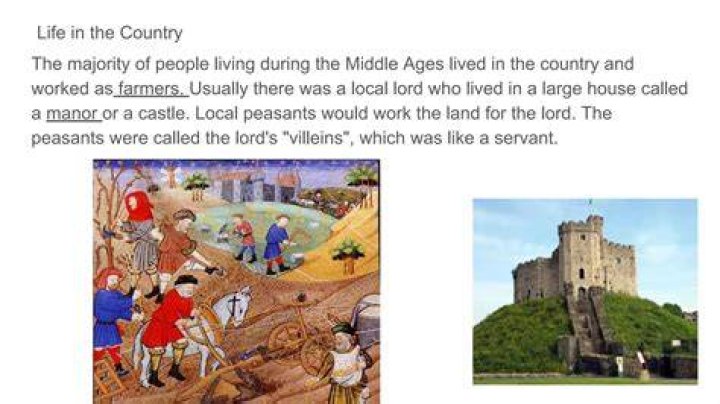
 Matthew Sanders