What is the window for giving tPA?
 Matthew Alvarez
 .
Regarding this, what is the window for administering tPA?
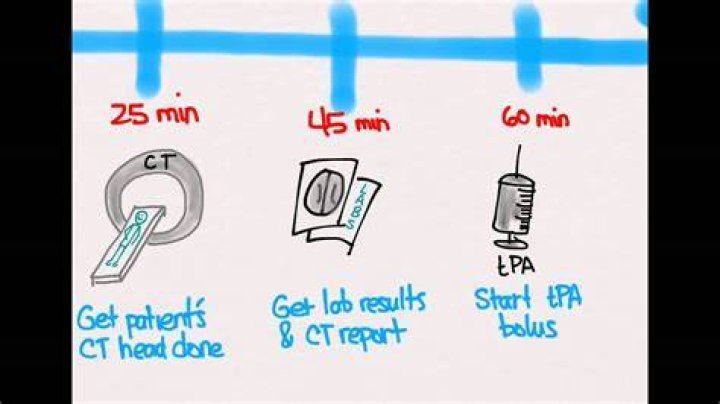
IV tPA should be administered to all eligible acute stroke patients within 3 hours of last known normal and to a more selective group of eligible acute stroke patients (based on ECASS III exclusion criteria) within 4.5 hours of last known normal.
Additionally, can you give tPA in pregnancy? Pregnancy has historically been regarded as a contraindication to IV tPA treatment. Yet tPA is not known to be teratogenic and tPA is also too large a molecule to cross the placenta.
Also question is, how soon must tPA be given?
The most commonly used drug for thrombolytic therapy is tissue plasminogen activator (tPA), but other drugs can do the same thing. Ideally, you should receive thrombolytic medicines within the first 30 minutes after arriving at the hospital for treatment. A blood clot can block the arteries to the heart.
What is tPA and when is it used?
Medical uses. tPA is used in some cases of diseases that feature blood clots, such as pulmonary embolism, myocardial infarction, and stroke, in a medical treatment called thrombolysis. The most common use is for ischemic stroke.
Related Question Answers
When should you not give tPA?
If the patient has an elevated blood pressure (SBP >185 or DBP >110) as their only contraindication to receiving tPA, consider using parenteral medication to lower their blood pressure to an acceptable level.Does tPA work immediately?
Administration of tPATreatment with tissue plasminogen activator (tPA) has been effective for people with an ischemic stroke as long as it is received intravenously within three hours of the onset of symptoms.Why is there no tPA after 3 hours?
Most of them are ineligible because they come to the hospital after the three-hour time window." The timing of treatment is important, because giving a strong blood thinner like tPA during a stroke can cause bleeding inside the brain.Is there an age limit for tPA?
Although earlier treatment was associated with better outcomes, patients in every subgroup of age and stroke severity receiving tissue plasminogen activator (tPA) within 4.5 hours of symptom onset benefited from treatment, with more patients left with little or no disability, including patients over 80 years of age.What is the risk of tPA?
Approximately 2% to 5% of patients with acute ischemic stroke receive r-tPA. Complications related to intravenous r-tPA include symptomatic intracranial hemorrhage, major systemic hemorrhage, and angioedema in approximately 6%, 2%, and 5% of patients, respectively.Can nurses give tPA?
To be eligible for tPA, the patient must reach a certified stroke center as soon as possible after symptom onset. As a nurse, your assessment of the patient's signs and symptoms and your knowledge of stroke treatment are vital.Why does tPA have a time limit?
There are several reasons for it. Most of them are logistical. First, everyone gets into a tizzy because of the 3 (or 4.5) hour time limit after the onset of symptoms that which TPA can be given and hopefully improve the patient's outcome. Often there were milder symptoms before that were ignored or unrealized.What is the stroke shot?
An IV injection of recombinant tissue plasminogen activator (tPA) — also called alteplase (Activase) — is the gold standard treatment for ischemic stroke. An injection of tPA is usually given through a vein in the arm with the first three hours.How much does tPA cost?
The cost of tPA was "relatively stable from 2005 to about 2009, when it began to increase over time," Dr Kleindorfer reported. In 2005, 1 mg of tPA cost $30.50, compared with $64.30 in 2014, meaning the standard 100-mg vial of tPA cost about $6400 in 2014, she explained.What are the side effects of tPA?
Other important side effects include: Nausea. Vomiting.
Other possible serious side effects include:
- Pulmonary embolism.
- Cholesterol embolism.
- Abnormal heartbeats.
- Allergic reactions.
- Re-embolization of deep DVT venous thrombi during treatment of acute massive pulmonary embolism.
- Angioedema.
Can tPA be given more than once?
It's a one-time drug… yet so became the target of a muckraking campaign. Unlike drugs such as Vioxx, which were prescribed for daily use to masses of patients only to show unanticipated adverse effects, tPA for stroke is usually given once, intravenously.Is aspirin a thrombolytic?
Antiplatelet agentsOthers likely to be prescribed antiplatelets include people who have had a heart attack and used thrombolytic medication to dissolve a clot, and people who have had blood flow restored to their heart through catheterization. Aspirin is the most well-known type of antiplatelet medicine.Why would you not give tPA to all stroke victims automatically?
“Because tPA is a clot-dissolving medicine that restores blood flow to brain regions that are not getting enough blood flow, there's an increased risk of bleeding occurring into that brain region,” Saver explains.What happens in the first 3 days after a stroke?
The first three days after a patient is admitted to a stroke care facility is called the hyper acute care, and it covers a time period from the moment the patient enters the hospital to the time he/she is out of imminent danger. This allows the doctor to decide if the patient needs surgery or thrombolysis.Do you give tPA for a TIA?
NO-GO TO TPA FOR TIA. Thrombolysis is not a rational or evidence-based therapeutic option for transient ischemia, irrespective of vascular status. Even with overt MCA occlusion, complete resolution of symptoms during evaluation does not warrant intravenous tissue-plasminogen activator (tPA).What is the half life of tPA?
The half-life of tPA in the bloodstream is rather short, 5-10 minutes in humans, as a result of PAI-1-mediated inhibition and LRP1-mediated liver uptake [14].Why do people get strokes?
Causes of strokes include ischemia (loss of blood supply) or hemorrhage (bleeding) in the brain. People at risk for stroke include those who have high blood pressure, high cholesterol, diabetes, and those who smoke.What are the contraindications for tPA?
Contraindications for IV tPA:- ? Symptom onset is unknown, > 4.5 hours, or if patient awoke with stroke.
- ? Acute or previous intracranial hemorrhage.
- ? Imaging showing extensive regions of irreversible injury (hypoattenuation)
- ? Prior ischemic stroke, severe head trauma, or intracranial/intraspinal surgery within 3 months.