What is precast concrete? | ContextResponse.com
 Rachel Acosta
 .
Also know, why is precast concrete used?
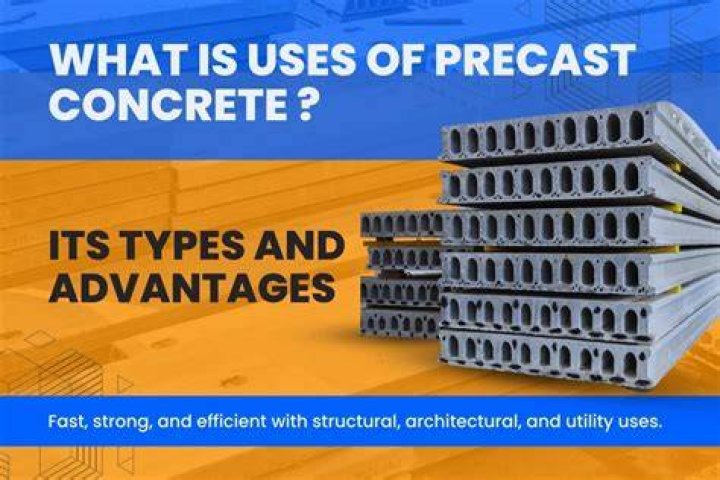
Precast concrete is incredibly dense, and the process used to create it makes it denser and more resilient than other concrete options. This density is why it is used in many walls and privacy construction elements for large-scale construction as well as sound walls around communities that may face a highway.
Similarly, what is precast concrete made of? Precast concrete is made up of coarse and fine aggregates, cement, water, and admixtures. It is mixed in the factory's batch plant according to the concrete mix design specified by the engineer.
Likewise, people ask, what is the advantage of precast concrete?
Precast concrete structures provide superior resistance to fires, natural disasters, insects and mold. Like no other building material, its resistance to rain, wind damage, earthquakes, termites and decay provides lower maintenance and insurance costs.
Is precast concrete cheaper?
The study established that precast concrete slabs were on average 23.22% cheaper than the cast-in-place concrete elements and precast columns were averagely 21.4% less than cast-in-place concrete columns.
Related Question Answers
How long does precast concrete last?
Some say concrete can last up to 2,000 years, and there are certainly many structures around that are well on their way to such a ripe old age. … BECAUSE IT GETS STRONGER EVERY DAY. Unlike most other materials, precast concrete increases in strength over time.Is precast concrete cheaper than brick?
Permacast Concrete WallsThey are sustainable over long periods of time without maintenance. They are an energy efficient option when used structurally. Precast Brick wall is cost effective because it requires little to no maintenance over time. It is also cost effective because of the speedy setup process.How thick are precast concrete panels?
A minimum thickness of the precast wall panels is 125 mm when reinforced and 150 mm where a vertical projecting bar from the footing or floor engages with a dowel duct in the bottom of the precast panel. For panels up to 175 mm thick, one layer of central mesh is generally used above that, two layers are used.How strong is precast concrete?
Precast manufacturers commonly use concrete with compressive strengths in the range of 4,000 psi to 5,000 psi. When the industry was in its infancy, 3,000 psi was the common 28-day compressive strength specified.What are the advantages and disadvantages of precast concrete?
Advantages and Disadvantages of Precast Concrete Construction- Very rapid speed of erection.
- Good quality control.
- Entire building can be precast-walls, floors,beams,etc.
- Rapid construction on site.
- High quality because of the controlled conditions in the factory.
- Prestressing is easily done which can reduce the size and number of the structural members.
What is the difference between precast and prefabricated concrete?
Precast Structures: A precast structre is built by casting concrete into a mould and then curing it in a controlled factory environment. Prefabricated Structures: These structures, too, are built in a controlled factory environment.Does precast concrete has rebar?
Precast concrete is poured into a wooden or steel mold with wire mesh or rebar. This mold may also have prestressed cable, if needed. It is cured in a controlled environment — usually at a plant.Is precast concrete sustainable?
Precast concrete is truly a sustainable green product, is also highly durable and uses an extremely low water-cement ratio. All of these sustainable benefits result in precast concrete products being chosen as priority materials in LEED-certified buildings.What are the types of precast concrete?
What are the different types of Precast Concrete?- Precast Beams. There are two main classes of beams:
- Precast Floor Slabs. The main varieties of slabs are employed in the formed frames are:
- Precast Walls. Precast concrete walls serve two functions:
- Precast Staircases.
- Precast Columns.
How do you make a precast concrete mold?
- Step 1 - Prepare the Mold. Begin by sealing all of the holes and pores in the items which will be used for casting.
- Step 2 - Make the Pattern. Place your objects into the bottom of the bucket.
- Step 3 - Make the Mold. Once you have arranged the objects, pour the rubber mold solution over the top.
- Step 4 - Testing the Mold.
Why are precast concrete structural elements usually cured with steam?
Why are precast concrete structural elements usually cured with steam? Steam curing of precast elements develops the full strength of the concrete many times faster than curing at ambient temperature, which allows the precasting plant to reuse its casting beds on a 24-hour pouring cycle.How are concrete walls made?
Concrete buildings are made with metal forms, which hold the concrete in place while it cures. Rebar, grooved steel rods of various thicknesses, are placed inside the forms to reinforce the concrete. Some buildings are constructed of poured concrete pillars and floors, with other materials used to construct the walls.What are the advantages and disadvantages of a frame structure?
ADVANTAGES AND DISADVANTAGES OF FRAME STRUCTURES • Advantages – One of the best easy in construction, easy to teach labor at construction side. Disadvantages– Span lengths are usually restricted to 40ft when normal reinforced concrete otherwise spans greater than that , can cause lateral deflections.What is prefabricated concrete construction?
BACKGROUND. The concept of precast (also known as “prefabricated”) construction includes those. buildings where the majority of structural components are standardized and produced in. plants in a location away from the building, and then transported to the site for assembly.What are the advantages of concrete?
10 major advantages of concrete are explained below.- Concrete is Economical.
- Concrete Hardens at Ambient Temperature.
- Ability to be Cast into Shape.
- Energy Efficiency in Production.
- Excellent Water Resistance Characteristics.
- High-temperature resistance.
- Ability to Consume and Recycle Waste.
- Application in Reinforced Concrete.