What does mitochondrial DNA tell us?
 Robert King
 .
Also know, why is mitochondrial DNA important?
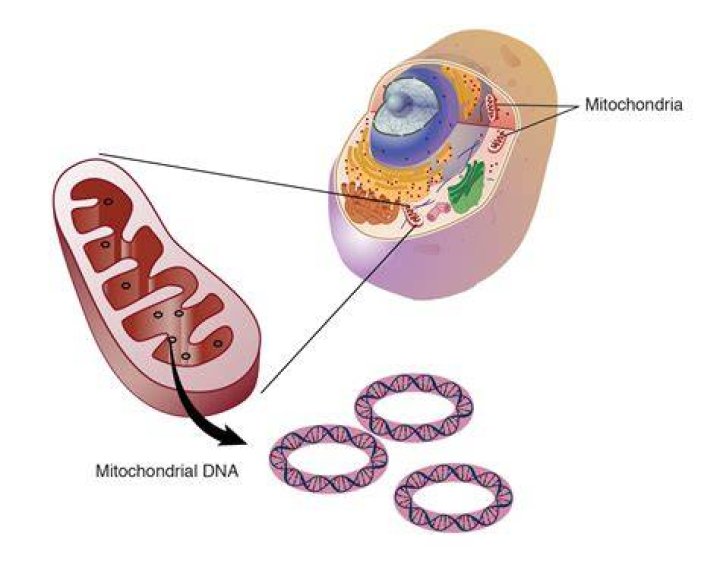
They play an important role in the regulation of cellular metabolism, apoptosis and oxydative stress control. Mitochondrial DNA (mtDNA) has many special features such as a high copy number in cell, maternal inheritance, and a high mutation rate which have made it attractive to scientists from many fields.
Also Know, what is an advantage of using mitochondrial DNA? Mitochondrial DNA offers several benefits over nuclear DNA when determining phylogenetic pathways, including: Higher mutation rate – Mitochondria produce reactive oxygen species, which cause sequences to mutate at a higher rate.
In this manner, why is mitochondrial better than nuclear DNA?
Mitochondrial DNA offers several benefits over nuclear DNA when determining phylogenetic pathways, including: Higher mutation rate – Mitochondria produce reactive oxygen species, which cause sequences to mutate at a higher rate.
How is mitochondrial DNA transmitted?
Mitochondrial DNA (mtDNA) is genetic material found in mitochondria. It is passed down from mothers to both sons and daughters, but sons cannot pass along their mothers' mtDNA to their children. This is because mtDNA is transmitted through the female egg. You inherited your mtDNA exclusively from your mother.
Related Question Answers
How is mitochondrial DNA different?
The mitochondrial genome is circular, whereas the nuclear genome is linear (Figure 3). The mitochondrial genome is built of 16,569 DNA base pairs, whereas the nuclear genome is made of 3.3 billion DNA base pairs. The mitochondrial genome contains 37 genes that encode 13 proteins, 22 tRNAs, and 2 rRNAs.Do all humans have the same mitochondrial DNA?
As a result, all humans today can trace their mitochondrial DNA back to her. Within her DNA, and that of her peers, existed almost all the genetic variation we see in contemporary humans. Since Eve's time, different populations of humans have drifted apart genetically, forming the distinct ethnic groups we see today.Who carries mitochondrial DNA?
Mitochondrial DNA Explained. Mitochondrial DNA (mtDNA) is genetic material found in mitochondria. It is passed down from mothers to both sons and daughters, but sons cannot pass along their mothers' mtDNA to their children. This is because mtDNA is transmitted through the female egg.What genes does mitochondrial DNA code for?
The human mitochondrial DNA (mtDNA) is a double-stranded, circular molecule of 16 569 bp and contains 37 genes coding for two rRNAs, 22 tRNAs and 13 polypeptides. The mtDNA-encoded polypeptides are all subunits of enzyme complexes of the oxidative phosphorylation system.How many mitochondrial DNA are there?
In humans, mitochondrial DNA (mtDNA) forms closed circular molecules that contain 16,569 DNA base pairs, with each such molecule normally containing a full set of the mitochondrial genes. Each human mitochondrion contains, on average, approximately 5 such mtDNA molecules, with the quantity ranging between 1 and 15.Is mitochondrial DNA circular or linear?
Mitochondrial vs.The mitochondrial genome is circular, whereas the nuclear genome is linear (Figure 3). The mitochondrial genome is built of 16,569 DNA base pairs, whereas the nuclear genome is made of 3.3 billion DNA base pairs.How do you test mitochondria?
They include: biochemical tests on urine, blood and spinal fluid. a muscle biopsy to examine the mitochondria and test enzyme levels. magnetic resonance imaging (MRI) of the brain and spine.
Testing depends on symptoms, and may include:
- echocardiogram.
- electrocardiogram (EKG)
- eye examinations.
- hearing tests.