The abiotic components of an ecosystem are the climate, soil, water, minerals, sunlight, precipitation and other non-living elements that sustain life in the ecosystem. Water, carbon dioxide and sunlight are used by plants to produce food in many ecosystems..
Moreover, what are the elements of an ecosystem?
An ecosystem can be categorized into its abiotic constituents, including minerals, climate, soil, water, sunlight, and all other nonliving elements, and its biotic constituents, consisting of all its living members.
Beside above, what are the main features of an ecosystem? The ecosystem is largely divided into two functional components; the Abiotic and Biotic.
- Abiotic. The abiotic component of the ecosystem refers to the physical environment or the non-living factors.
- Lakes.
- Deserts.
- Forests.
- Ponds.
- Gardens.
- Oceans.
- Grasslands.
Also know, what are the 5 basic components of an ecosystem?
In order to survive, ecosystems need five basic components: energy, mineral nutrients, water, oxygen, and living organisms. Most of the energy of an ecosystem comes from the sun. 14.
Who is the father of ecosystem?
Alexander von Humboldt
Related Question Answers
What are the functions of ecosystem?
Fundamentally, ecosystem functions are exchange of energy and nutrients in the food chain. These exchanges sustain plant and animal life on the planet as well as the decomposition of organic matter and the production of biomass.What is the importance of ecosystem?
Importance of Ecosystem:It provides habitat to wild plants and animals. It supports different food chains and food webs. It regulates essential ecological processes and support lives. Involved in the recycling of nutrients between biotic and abiotic components.What is called ecosystem?
An ecosystem is a large community of living organisms (plants, animals and microbes) in a particular area. The living and physical components are linked together through nutrient cycles and energy flows. Ecosystems are of any size, but usually they are in particular places. Each ecosystem has its own community.Which is the most important element of ecosystem?
Water, carbon dioxide and sunlight are used by plants to produce food in many ecosystems.What is the concept of an ecosystem?
An ecosystem is a community of living organisms in conjunction with the nonliving components of their environment, interacting as a system. These biotic and abiotic components are linked together through nutrient cycles and energy flows.What makes a good ecosystem?
A healthy ecosystem consists of native plant and animal populations interacting in balance with each other and nonliving things (for example, water and rocks). Healthy ecosystems have an energy source, usually the sun. Decomposers break down dead plants and animals, returning vital nutrients to the soil.What are the two main components of the ecosystem?
Two main components exist in an ecosystem: abiotic and biotic. The abiotic components of any ecosystem are the properties of the environment; the biotic components are the life forms that occupy a given ecosystem.What is ecosystem in biology?
A system that includes all living organisms (biotic factors) in an area as well as its physical environment (abiotic factors) functioning together as a unit. Supplement. An ecosystem is made up of plants, animals, microorganisms, soil, rocks, minerals, water sources and the local atmosphere interacting with one anotherWhat is the most stable ecosystem?
From all these above mentioned aspects, Oceans are considered to be the most stable ecosystem in nature. They are stable in their chemical composition due to being saline and other features like, dissolved oxygen, light, temperature also remain more or less constant.What is ecosystem and example?
Examples of ecosystems. Examples of ecosystems are: agroecosystem, aquatic ecosystem, coral reef, desert, forest, human ecosystem, littoral zone, marine ecosystem, prairie, rainforest, savanna, steppe, taiga, tundra, urban ecosystem and others.What is food chain in biology?
A food chain is a linear network of links in a food web starting from producer organisms (such as grass or trees which use radiation from the Sun to make their food) and ending at apex predator species (like grizzly bears or killer whales), detritivores (like earthworms or woodlice), or decomposer species (such asWhat is Biosphere explain?
The biosphere, (from Greek bios = life, sphaira, sphere) is the layer of the planet Earth where life exists. The biosphere is one of the four layers that surround the Earth along with the lithosphere (rock), hydrosphere (water) and atmosphere (air) and it is the sum of all the ecosystems. 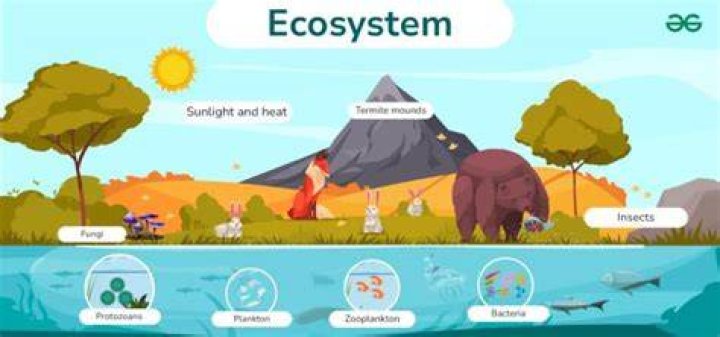
 Lily Fisher