Is tickseed an annual or perennial?
 Andrew Mccoy
 .
Keeping this in view, is a coreopsis an annual or perennial?
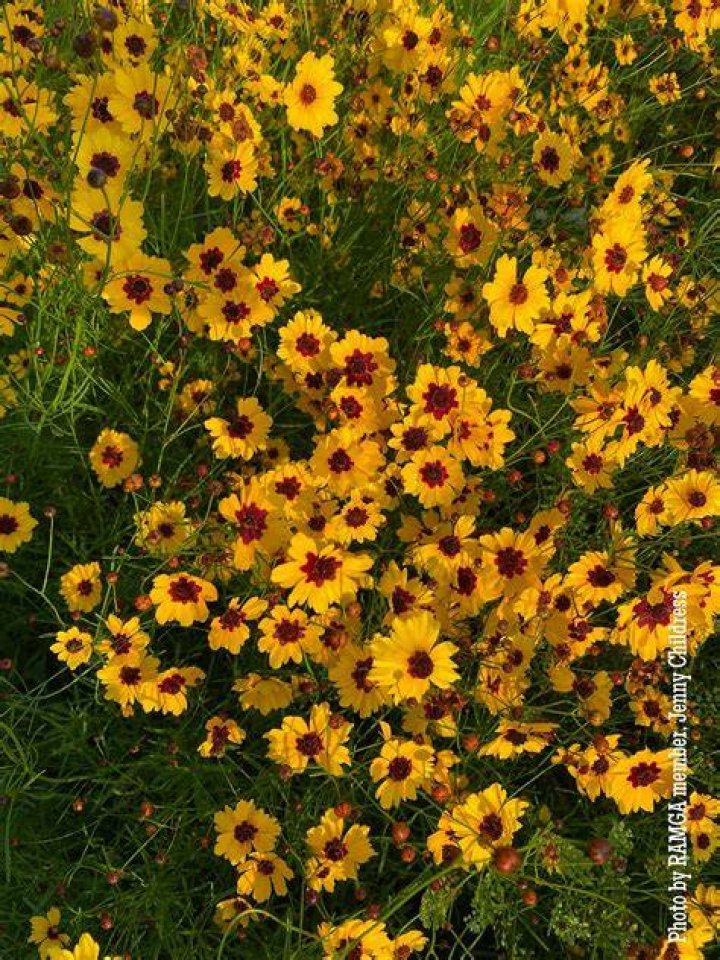
Coreopsis are sun-loving, low maintenance perennials with daisy-like flowers. They are drought tolerant, long-blooming and happy to grow in poor, sandy or rocky soil. Coreopsis are commonly known as tickseed, due to the unusual shape of their seed capsules.
Also Know, how do you keep coreopsis blooming? Deadheading will keep the plants blooming throughout the summer. Some of the smaller flowered varieties are difficult to deadhead and you may prefer to shear the plants, once the first flush of flowers fade. They will fill in quickly.
Also to know, do you deadhead tickseed?
The plant will not form new flower buds on a stem after the flower fades. Once all the flowers on the stem have bloomed, remove the entire stem. Most large-flowered tickseeds continue to bloom until fall if deadheaded regularly, but they bloom most prolifically during the long, hot days of midsummer.
Does tickseed bloom all summer?
Tickseed plants, Coreopsis grandiflora are hardy in USDA zones 4-9. C. grandiflora forms 9"-36" tall clumps that will spread to about 18". They have bright yellow, 2"-3", daisy-like flowers on tall stems that bloom all summer.
Related Question Answers
How do you care for coreopsis in the winter?
When it comes to winterizing coreopsis plants, watering and mulching are the most important steps you can take. No other coreopsis winter care is necessary, as the plant will be in a dormant stage of growth. Remove the mulch as soon as frost no longer threatens in spring.Does coreopsis need to be cut back?
Coreopsis grown as a perennial should be cut back after the summer growing season. Cut back one-third to one-half of the plant's height. Pruning should not extend into the older brown woody growth, as this may kill the plant, according to the University of California Cooperative Extension.Are all coreopsis perennials?
Coreopsis (Perennial) Several coreopsis species are perennials popular in the garden, all of them sporting bright daisylike flowers on wiry stems. These perennial flowers bloom in shades of yellow, orange, and pink, with lance-shaped, oval, or threadlike leaves.What colors does coreopsis come in?
Coreopsis Plant FeaturesAmp up the color in your flower borders with coreopsis. This amazing native plant, occasionally called tickseed, develops mass quantities of yellow, orange, rose, lavender, white, or bi-colored flowers through the early summer.Why is it called tickseed?
Specific epithet means having whorls in reference to the leaves. Plants in the genus Coreopsis are sometimes commonly called tickseed in reference to the resemblance of the seeds to ticks.Is coreopsis a pollinator?
Threadleaf Coreopsis Coreopsis verticillataAs an easy-to-grow, perennial this plant makes a wonderful addition to a pollinator garden. Coreopsis can be incorporated in any wildflower garden, particularly as a border plant. When aggressively deadheaded, coreopsis will continue to bloom throughout the season.Is coreopsis an evergreen?
Lanceleaf tickseed. FIRST IMPRESSIONS: Coreopsis lanceolata is a clump forming perennial that expands into colonies from underground rhizomes. The basal leaves close are evergreen and un-lobed. PLANT DESCRIPTION: Coreopsis lanceolata grows in small evergreen tufts or rosettes of narrow lance-shaped leaves.Why is my coreopsis turning brown?
The Sclerotium rolfsii fungus causes crown rot in coreopsis plantings. White fungal webbing forms around the base of the plant, and the leaves and blossoms turn brown as they wilt and die. Root rot can also be caused by the Rhizoctonia fungus, although sometimes Phymatotrichopsis is the cause.How do you take care of a tickseed plant?
Seeds of coreopsis plants need light to germinate, so cover lightly with soil or perlite or simply press seeds into moist soil. Keep the seeds of coreopsis plants watered until germination, usually within 21 days. Care of coreopsis may include misting the seeds for moisture.How tall does tickseed get?
Tickseed starts flowering in June and lasts through frost; blooms surge throughout the summer and fall. This perennial is a low-maintenance plant, requiring very little care once established. Plant size ranges from 16 to 24 inches tall and 15 to 18 inches wide, depending on cultivar.Do I deadhead coneflowers?
When coneflower blooms start to fade, they can be deadheaded. Deadheading does not change the size of flowers or the length of the blooming season. Although it is not necessary to deadhead coneflowers, it keeps the garden tidy. Leaving a few spent flowers may attract birds, because they like to snack on the seeds.What is eating my coreopsis?
The foliage is the favored snack of coreopsis beetles. Both adults and larvae feed on the leaves, skeletonizing them by eating the soft tissue between the veins and midribs. Controlling these beetles is a challenge. They damage plants so quickly that it's often too late to reach for a chemical control.What is Calliopsis?
Definition of calliopsis. 1 capitalized, in some classifications : a genus of plants comprising chiefly the annual members of the genus Coreopsis. 2 plural calliopsis : coreopsis sense 2 especially : a cultivated annual plant of the genus Coreopsis.Where do you plant tickseed?
Sowing Coreopsis Directly in the Garden:- Choose a location in full sun with well-drained soil after danger of frost.
- Remove weeds and work organic matter into the top 6-8 inches of soil; then level and smooth.
- Sow evenly and thinly cover with ½ inch of fine soil.
- Firm the soil lightly and keep it evenly moist.